Cornet V0.0.1 Bug: Missing Colors In FBX4VRM Conversion
Introduction
This document details a bug report for the avatar "Cornet" version v0.0.1, specifically concerning missing colors after conversion using FBX4VRM. This issue was automatically generated from the FBX4VRM Bug Report API and is crucial for addressing and resolving the problem in future updates. Understanding these reports and addressing the issues that are encountered by users is extremely important to improve any software or tool. In this case, the bug report provides a comprehensive view of the encountered issue, environment details, conversion outcomes, and user observations, making it an invaluable resource for developers. By thoroughly analyzing such reports, developers can pinpoint the exact cause of the bug, devise effective solutions, and ensure a smoother, more reliable experience for all users. The focus of this report is to examine the specific problem with Cornet v0.0.1, ensuring that the avatar appears as intended after the FBX4VRM conversion process. This ensures user satisfaction and demonstrates the commitment of the development team to address user feedback and maintain high standards of quality.
Bug Report Details
- Parent Issue: #300
- Avatar Name: Cornet
- Version: v0.0.1
- Report ID: 8d1ee3b9
- Platform: fbx4vrm
- Date & Time: 2025-12-03T11:42:41+09:00
This bug report, identified by the unique Report ID 8d1ee3b9, was automatically generated on December 3, 2025, at 11:42:41 JST. The issue pertains to the avatar named Cornet, specifically version v0.0.1, and is classified under the fbx4vrm platform. This information is crucial for developers as it provides a clear timeline and context for the problem. By noting the exact date and time, as well as the platform, developers can cross-reference other reports or changes made around the same period to identify potential causes or related issues. The Parent Issue #300 links this report to a broader discussion or tracking thread, allowing for a more holistic view of the bug's impact and resolution process. This level of detail ensures that the development team can effectively prioritize and address the bug, leading to a more robust and user-friendly final product. Understanding these preliminary details helps in systematically approaching the debugging process and ensuring no aspect of the issue is overlooked.
Environment Information
- FBX4VRM Version: 0.0.1
- Unity Version: 2022.3.22f1
- UniVRM Version: Unknown
- Render Pipeline: Built-in
- Platform: Windows 11 (10.0.26100) 64bit (AMD Ryzen 7 3700X 8-Core Processor)
The environment in which the bug was encountered is detailed above. The FBX4VRM Version is 0.0.1, aligning with the avatar version and indicating a potential issue specific to this release. The Unity Version is 2022.3.22f1, a key piece of information for compatibility assessments and bug replication. The UniVRM Version is listed as unknown, which suggests that this information was either not captured or unavailable during the report generation, a point for potential improvement in future reporting mechanisms. The Render Pipeline used was Built-in, a standard pipeline in Unity, while the platform was Windows 11 (64bit) running on an AMD Ryzen 7 3700X 8-Core Processor. This comprehensive environment data is essential for developers, as it allows them to recreate the exact conditions under which the bug occurred. By replicating the environment, developers can more effectively debug and test potential solutions, ensuring the fix addresses the root cause of the issue. This level of detail minimizes guesswork and accelerates the bug resolution process, leading to more stable and reliable software.
Conversion Result
- Success: ❌ No
- Processing Time: N/A ms
- Failed Processor: N/A
- Error Message: N/A
The conversion result provides a clear indication of the issue's severity. The Success status is marked as “No,” confirming that the conversion process failed to complete successfully. The Processing Time is listed as N/A (Not Applicable), which might suggest that the failure occurred early in the process, preventing any meaningful time measurement. Similarly, the Failed Processor and Error Message are both N/A, indicating that the system either did not identify a specific processor at fault or did not generate an explicit error message. This lack of detailed failure information can be a challenge for debugging, as it requires developers to delve deeper into potential causes without a direct pointer. However, the fact that the conversion failed outright is a critical piece of information, suggesting a fundamental issue rather than a minor glitch. Developers might need to examine the input data, the conversion pipeline, and the system logs more closely to pinpoint the exact reason for the failure. Understanding the nature of the failure—whether it's a complete stop or a partial error—helps in prioritizing debugging efforts and allocating resources effectively.
Skeletal Information
- Humanoid: Yes
- T-Pose Valid: Yes
- Bone Hierarchy Valid: Yes
- Total Bones: 164
- Missing Recommended Bones: UpperChest
The skeletal information section offers insights into the avatar's bone structure. The Humanoid status is “Yes,” indicating that the avatar is designed with a standard humanoid skeleton, which is crucial for compatibility with various animation systems and platforms. A T-Pose Valid status of “Yes” means the avatar’s default pose is correctly set, an essential factor for proper rigging and animation. Bone Hierarchy Valid is also marked “Yes,” ensuring that the skeletal structure is logically organized and free of structural errors. The Total Bones count is 164, providing a quantitative measure of the avatar's complexity. However, the report also notes Missing Recommended Bones: UpperChest. This missing bone could potentially lead to deformation issues or limitations in animation, especially in the upper body region. Developers need to consider this when troubleshooting the color issue, as skeletal discrepancies can sometimes indirectly affect material rendering or skinning. Overall, the skeletal information suggests a generally well-structured avatar, but the missing UpperChest bone warrants further investigation to ensure it’s not contributing to the reported problem. Addressing this skeletal detail can enhance the avatar's overall quality and animation fidelity.
Material Information
- Total Materials: 5
The material information section provides a concise overview of the materials applied to the avatar. The report indicates a Total Materials count of 5. This number gives developers a sense of the avatar's complexity in terms of texturing and visual appearance. Fewer materials might suggest a simpler design, while a higher number could indicate more intricate texturing and shading. In the context of the reported bug—missing colors—the number of materials is relevant. If the avatar has multiple materials, the issue might be isolated to specific ones, potentially pointing to a problem with a particular shader or texture. On the other hand, if all materials are affected, the problem might lie in a more fundamental aspect of the conversion process or rendering pipeline. Developers need to examine each material's properties and how they are being processed during the FBX4VRM conversion to identify the root cause of the color loss. Understanding the material composition is crucial for effective debugging and ensuring the avatar's visual integrity.
Notification Summary
- Info: 0
- Warning: 1
- Error: 0
The notification summary provides a quick overview of the issues flagged during the conversion process. There are 0 Info notifications, indicating no informational messages were generated. There is 1 Warning, suggesting a potential issue that did not halt the process but warrants attention. Finally, there are 0 Errors, meaning no critical errors were encountered that would have stopped the conversion outright (though the conversion ultimately failed, as noted earlier). The presence of a warning is a key point for developers. Warnings often highlight areas of concern that, while not immediately causing failure, could lead to unexpected behavior or visual discrepancies. In this case, the warning might be related to the missing colors or some other aspect of the avatar's setup. Identifying and addressing the warning could be crucial in resolving the primary bug. Developers should examine the warning message in detail to understand its implications and take corrective actions to ensure a smooth and accurate conversion process.
User Comments
服と髪の色が無くなっている (The colors of the clothes and hair are missing)
The user comment directly states the problem: "The colors of the clothes and hair are missing." This straightforward observation is invaluable as it pinpoints the exact visual elements affected by the bug. User feedback is a cornerstone of effective bug fixing, providing a clear and immediate understanding of the issue's impact from the end-user perspective. In this case, the comment confirms that the colors are not simply muted or altered; they are completely absent from the clothing and hair. This suggests a potential problem with texture loading, material assignment, or shader compatibility during the FBX4VRM conversion. Developers can use this information to focus their debugging efforts on these specific areas, examining how textures and materials are processed for these parts of the avatar. The user comment serves as a direct validation of the problem's nature and guides the development team toward a targeted solution.
Screenshot
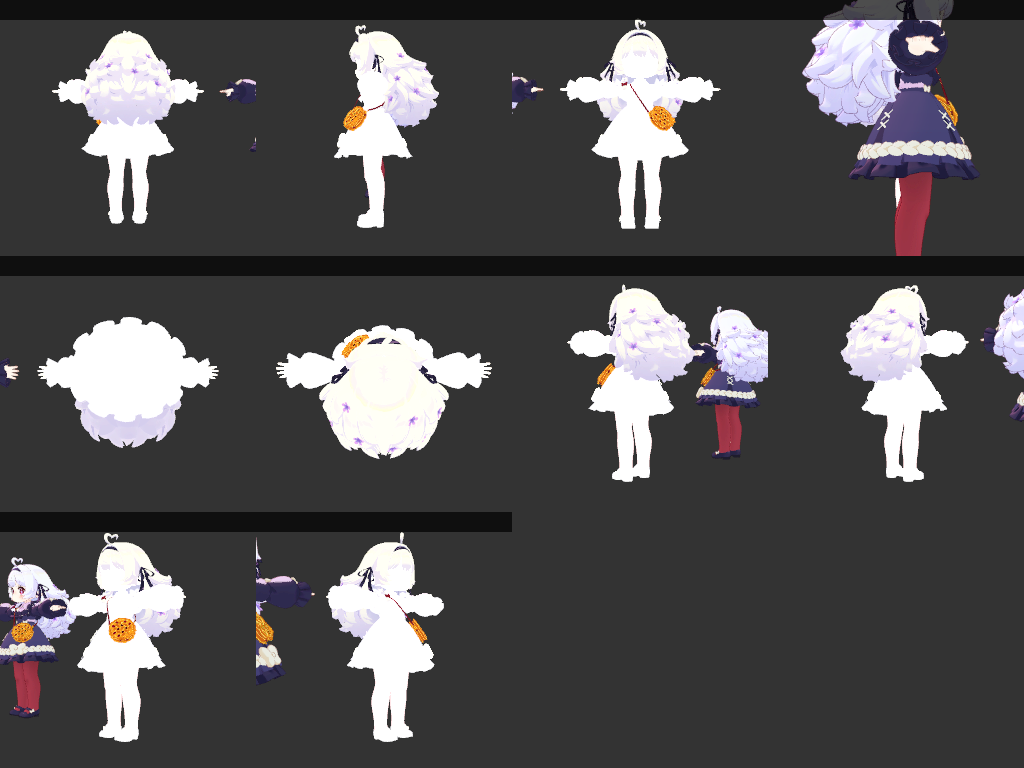
The screenshot provided is a visual confirmation of the user's comment, showing the Cornet avatar with missing colors in the clothing and hair. Visual evidence like screenshots is crucial for bug reports, as it leaves no room for ambiguity regarding the issue's appearance. The screenshot allows developers to see the problem firsthand, understanding the specific areas affected and the extent of the color loss. This visual context is especially helpful when dealing with rendering or material-related bugs, where a clear picture of the artifact or discrepancy can significantly accelerate the debugging process. By examining the screenshot, developers can immediately validate the user's feedback and gain insights into potential causes, such as texture loading failures, shader incompatibilities, or incorrect material assignments. The availability of a screenshot enhances the clarity and effectiveness of the bug report, ensuring that the development team can address the issue accurately and efficiently.
Conclusion
This comprehensive bug report for Cornet v0.0.1 highlights a critical issue of missing colors after FBX4VRM conversion. The detailed information provided, including environment specifics, conversion results, skeletal and material data, user comments, and a visual screenshot, offers a clear and actionable understanding of the problem. By addressing this bug, the development team can ensure a more seamless and visually accurate avatar experience for users. This not only improves the overall quality of the product but also demonstrates a commitment to responsiveness and user satisfaction. Thoroughly examining such reports and implementing the necessary fixes ensures the software's reliability and builds trust with its user base. The meticulous approach to bug reporting and resolution is paramount in delivering robust and user-friendly software. For more information on VRM standards and best practices, consider visiting the VRM Consortium website.
